What can go wrong
Flood and hail damaged cars in Australia: spotting storm write-offs
7 min read
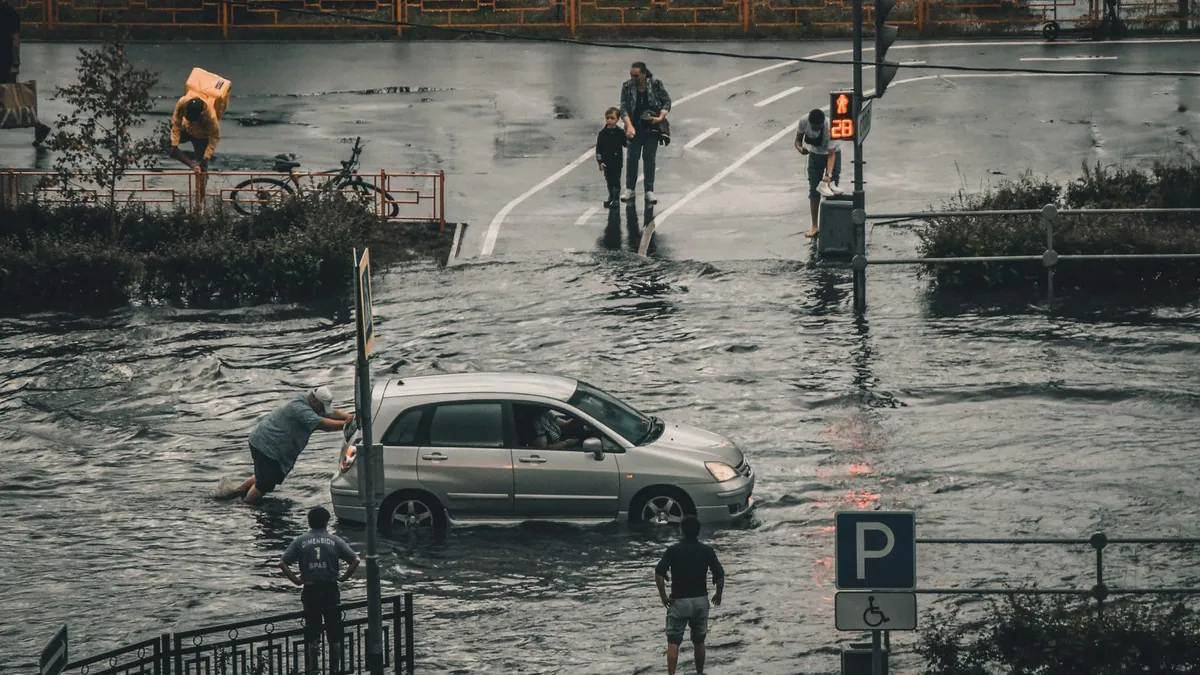
How to spot flood immersion and hail write-offs in Australia: inspection telltales, WOVR incident damage codes, and electrical corrosion risks.
Why storm-damaged vehicles flood the Australian used market
Following severe Australian weather events, such as East Coast low floods in New South Wales and Queensland, or severe hail storms across Sydney, Melbourne, and Brisbane, thousands of damaged cars enter the secondary market.
While insurers write off vehicles with severe immersion or extensive hail impact, many storm-damaged cars are acquired through salvage auctions or repaired cheaply off-the-books and offered privately to unsuspecting buyers.
Water immersion: the silent electronic cancer
Unlike cosmetic panel dents, floodwater immersion causes catastrophic long-term degradation that may not be apparent during a brief test drive.
Modern vehicles contain dozens of electronic control units (ECUs), complex body wiring looms, and sensitive safety modules located low in the footwells and under seats. When submerged in floodwater, silt and contaminants penetrate connectors.
Even after carpets and seats are dried, electrolytic capillary corrosion slowly eats away at internal copper wiring pins over 6 to 24 months. This results in unpredictable electrical gremlins, sudden engine stalling at highway speeds, power steering failure, and airbag deployment malfunctions.
How the Written-Off Vehicle Register (WOVR) records storm damage
When an insurance assessor inspects a storm-damaged vehicle and declares it a total loss, the incident must be reported to the national Written-Off Vehicle Register with specific damage classification codes:
- Water Immersion (Damage Code W): In most Australian jurisdictions, flood damage that submerges the floor pan or dashboard automatically classifies the vehicle as a Statutory Write-Off. These vehicles can never legally be registered again in Australia and are strictly for parts or scrap.
- Hail Damage (Damage Code H): Hail damage that leaves the vehicle structurally intact is often classified as a Repairable Write-Off. The vehicle may be repaired using paintless dent repair (PDR), subjected to a state structural roadworthiness inspection, and re-registered.
- Incident location indicators: Official register reports detail the affected areas (for example, roof, bonnet, passenger compartment, or full vehicle immersion).
Physical telltale signs of hidden flood immersion
When inspecting a vehicle in person, use a bright torch to check for telltale signs of prior water immersion:
- Musty odour: A damp, mildew smell that persists despite heavy air fresheners or ozone treatments.
- Silt deposits: Check inside the spare tyre recess in the boot, behind the glovebox, inside fuse boxes, and behind door rubber seals for fine dried silt or dried river mud.
- Seat rail corrosion: Look under the front seats. Unpainted seat brackets and mounting bolts will show premature surface rust.
- Water marks in light clusters: Examine headlights and tail light assemblies for internal moisture fogging or dried high-water condensation tide marks.
- Seatbelt webbing: Pull front seatbelts out to their maximum extension. Flood-immersed seatbelts often display water staining or mud lines near the lower spool anchor.
Checking write-off history before you make an offer
A free state registration check will not tell you if a car has a recorded history of flood or hail damage, nor will it detail interstate write-off records.
Running an official car history check against the national Written-Off Vehicle Register confirms whether the car has ever been declared a total loss for flood immersion or hail damage, the date of recording, and whether it is legally permitted to be driven on Australian roads.
Common questions
- Can a flood-damaged car be legally registered again in Australia?
- In most Australian jurisdictions, a vehicle written off due to deep water immersion is classified as a statutory write-off and can never be legally registered again for road use in Australia.
- How do I know if a car was written off for hail damage?
- An official car history check queries the national Written-Off Vehicle Register, which records the incident damage code. Hail damage is explicitly flagged with its recording date and jurisdiction.
- Is it safe to buy a repairable write-off that had hail damage?
- Unlike collision or flood damage, hail damage is typically cosmetic. If repaired properly and verified structurally sound, it can be reliable transport, but you should pay significantly below normal market value.
Check the car you are looking at
Enter an Australian plate or 17-character VIN. Run an instant free identity check, then add the official register searches this guide is about.